.png)
The Powerful Iroquois Confederacy of the Northeast
- Joe N Jill Morey
- Oct 16, 2023
- 5 min read
Updated: Oct 22, 2023
By Sean Whyte
Rez Life Ink Slinger
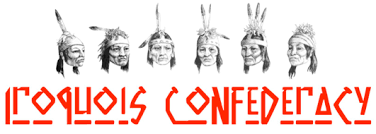
Amidst the dense forests and rolling hills of the northeastern United States, a confederacy of Native American nations emerged to create one of the most influential and powerful indigenous societies in North America. The Iroquois Confederacy, also known as the Haudenosaunee, thrived in the region for centuries, leaving behind a legacy of governance, diplomacy, and culture that still resonates today.
I. The Formation of the Iroquois Confederacy
The story of the Iroquois Confederacy began centuries before the arrival of European settlers. The confederacy was composed of five distinct nations: the Mohawk, Oneida, Onondaga, Cayuga, and Seneca, and later, the Tuscarora. Each nation had its own language, customs, and territory, but they shared a common cultural and political heritage.
The legendary origins of the Iroquois Confederacy are recounted in a creation story known as the "Great Law of Peace." According to this tradition, a visionary leader named Hiawatha, sometimes called Ayonwentah, united the five nations through diplomacy and the establishment of a council system. Hiawatha, along with a charismatic leader named Deganawida, promoted the values of peace, unity, and cooperation. The legend of the Peacemaker's arrival and the council's formation stands as a testament to the Iroquois' commitment to resolving conflicts and maintaining a harmonious society.

II. The Structure of the Confederacy
The political structure of the Iroquois Confederacy was both sophisticated and democratic, serving as a model for future governments. The council system was the backbone of the confederacy, where each nation was represented by chiefs and clan mothers. Decision-making in the council was based on consensus, where every voice was heard and respected.
The council deliberated on various issues, from trade and alliances to matters of war and peace. The decisions made in the council were binding on all member nations, reinforcing the principles of unity and collective action. The council meetings were conducted in a highly organized manner, with wampum belts used to record important agreements and treaties.
Women played a vital role in the Iroquois Confederacy's governance through the clan mothers' system. Clan mothers held significant influence and were responsible for selecting and replacing chiefs. The matrilineal structure of the Iroquois society provided balance and harmony within the confederacy.
III. Diplomacy and Alliances
One of the most remarkable aspects of the Iroquois Confederacy was its ability to form diplomatic relations and alliances with neighboring Native American nations. The confederacy's territory stretched across the northeastern woodlands, and they engaged in various forms of diplomacy and trade with their neighboring tribes.
The Iroquois maintained a policy of neutrality during periods of conflict between European colonial powers. This stance allowed them to engage in trade with both the French and the British, often leveraging their strategic position for favorable terms.
The Five Nations also extended their influence through diplomacy and alliance-building with tribes such as the Huron, Abenaki, and Lenape. These alliances were often forged through the exchange of wampum belts, which served as a symbolic representation of agreements and treaties.
IV. The Beaver Wars
The Iroquois Confederacy's expansionist tendencies became evident during the Beaver Wars, a series of conflicts in the mid-17th century. The Iroquois sought to control the fur trade in the region, leading them to wage war against various Native American nations, including the Huron, Algonquian-speaking tribes, and the French allies.
The Beaver Wars were characterized by intense warfare, brutal tactics, and the displacement of numerous tribes. The Iroquois sought to secure their dominance in the fur trade and expand their territory. Their success in these wars cemented their position as a dominant force in the region and allowed them to control key trading routes.

V. The Arrival of European Settlers
As European settlers began arriving in North America, they encountered the Iroquois Confederacy, which was already a formidable and influential power. The Iroquois engaged with European colonists and explored trade relationships with them. In particular, the Dutch formed trade partnerships with the Iroquois, providing them with firearms and other valuable goods.
The presence of European settlers in the region led to both cooperation and conflict with the Iroquois. The Dutch, English, and French powers sought to secure the Iroquois as allies, leading to a complex web of diplomatic relations. The Iroquois played European powers against each other to maintain their independence and leverage their position for trade and other advantages.

VI. The American Revolution
The American Revolution brought significant challenges to the Iroquois Confederacy. The confederacy was divided in its response to the conflict. While some nations, such as the Oneida and Tuscarora, supported the American cause, others, like the Mohawk and Seneca, allied with the British.
The division of the Iroquois Confederacy during the American Revolution created tensions and led to devastating consequences for some member nations. Battles raged between pro-British and pro-American Iroquois, resulting in the destruction of villages and the displacement of populations.
VII. The Loss of Territory
The aftermath of the American Revolution and the rise of the United States marked a period of profound change for the Iroquois Confederacy. The Treaty of Paris in 1783 recognized the United States as an independent nation, and the Iroquois found themselves in a difficult position.
The newly formed United States expanded rapidly, encroaching on Iroquois lands. The confederacy faced mounting pressure to cede territory through a series of treaties, which further reduced their territorial holdings.
The Treaty of Canandaigua in 1794, negotiated by the United States and the Iroquois, was intended to secure peace and protect Iroquois lands. However, the reality was that the Iroquois continued to lose land, and their traditional way of life was increasingly threatened.

VIII. The Legacy of the Iroquois Confederacy
The story of the Iroquois Confederacy is one of remarkable endurance, adaptation, and diplomacy in the face of enormous challenges. Their democratic council system, matrilineal society, and principles of unity and consensus continue to inspire those interested in indigenous governance and cultural heritage.
Today, the Iroquois Confederacy's legacy endures in several ways:
1. Cultural Heritage: The Iroquois Confederacy's rich cultural heritage is celebrated through various traditional practices, such as the Longhouse religion, wampum belt-making, storytelling, and the revitalization of the Mohawk, Oneida, Onondaga, Cayuga, and Seneca languages.
2. Modern Governance: The confederacy's political structure served as an inspiration for democratic governance and influenced the formation of the United States. Elements of the Iroquois council system and principles of consensus have left an indelible mark on American political thought.
3. Land and Sovereignty: Despite the loss of territory, the Iroquois continue to assert their sovereignty and advocate for their land rights. They maintain reservations and work to preserve their cultural practices and language.

4. International Relations: The Iroquois Confederacy's legacy in diplomacy and alliance-building remains significant in the realm of indigenous and international relations. Their contributions to the broader understanding of diplomacy and treaty-making are recognized and respected.
The Iroquois Confederacy, a powerful and influential entity in North American history, exemplifies the resilience and adaptability of indigenous cultures in the face of immense change and adversity. Their contributions to governance, diplomacy, and culture continue to resonate, leaving an enduring mark on the tapestry of North American history.


Comments